
Extracted from the website of Buddhist Vajrayana Charity Funds Association and translated (五妙供) into English:
Five Wonderful
Offerings
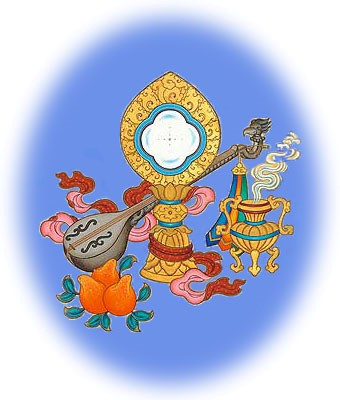
Concisely called the "Five Offerings", the five objects for offering are: fragrance, flower-rosary, burning-incense, food & drink, oil lamp/lit candle. In Tantra Buddhism, when cultivating a dharma session, these are the five types of offerings for offering the Yidam.
Five Wonderful Offerings also represent five subtle contacts. The five contacts are the five senses/perceptions (which are: eye, ear, nose, tongue and body), and the objects of the five offerings represent the eye, ear, nose, tongue and body. Furthermore, in Buddha Dharma terms: the flower we see, is the thing we watch with our eyes and hence, represents colour and dust; the conch represents all types of sound that the ear can hear; incense is sensed by the nose; the taste of food is sampled by the tongue; and scent of the body is the sense of touch. These are also the senses of "colour, sound, fragrance, taste, touch", comprising of all our conscious perceptions in the world, and in all matters that we possess. The two categories are as follows:
| 1. | Five senses (eye, ear, nose, tongue, body) match five offerings | ||
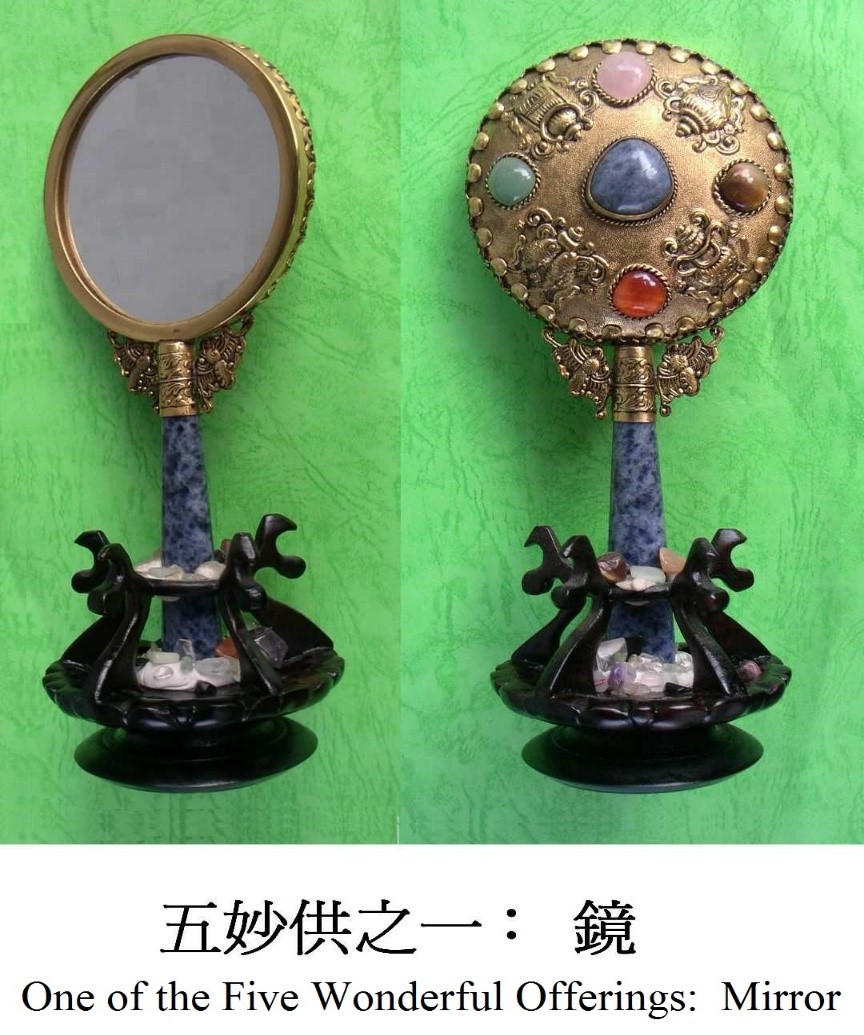
| Mirror | - | which is landscape/scenery, represents eye (form). | |
| Musical Instrument | - | which is sound, represents ear (sound). | |
| Incense | - | which is fragrant aroma, represents nose (smell). | |
| Food | - | which is taste, represents tongue (taste). | |
| Cloth | - | which is contact, represents body (touch). | |
| Note: | |
| ● | Musical instrument means all types of musical instruments, including cymbal, conch, bell, gong; Chinese pipa, Chinese flute, Chinese Erhu.......; Western style violin, piano and organ, etc. |
| ● | Food means all types of food, including fruit, cake, sweet and delicious drinks, sugar, honey, milk, yogurt, Torma (remark: Torma are figures made mostly of flour and butter used in tantric rituals or as offerings in Tibetan Buddhism), sacred liquor, etc. |
| ● | Cloth means any types of knitwear, including clothes, scarves, etc. |
| ● | Incense means all things with fragrant aroma, including sandalwood, agilawood, nutmeg (as well as almond), fragrant flowers. |
| 2. | The Five Wonderful Offerings of Tibetan Buddhism |
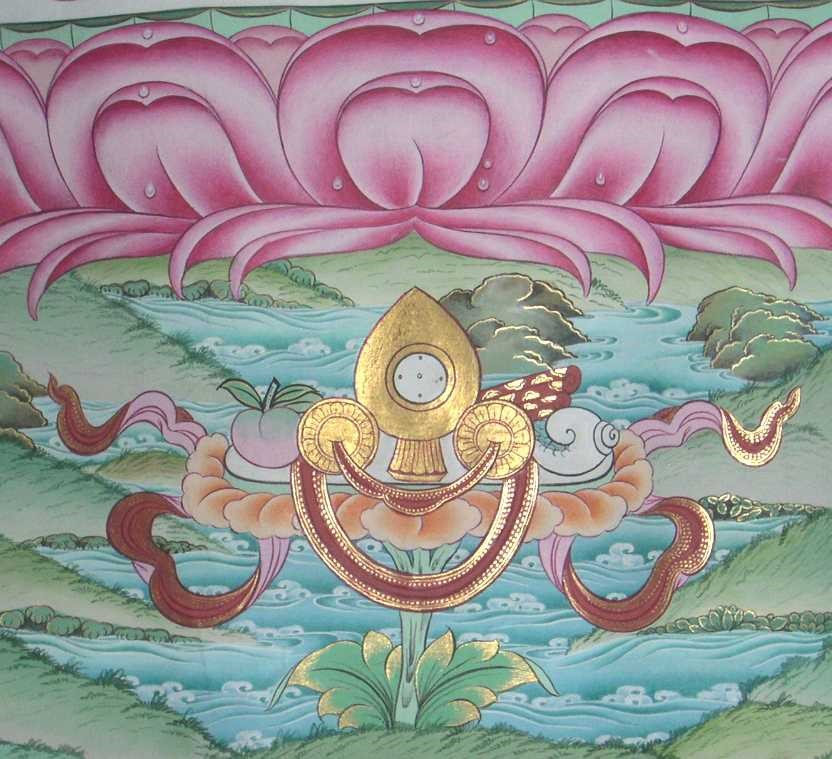 |
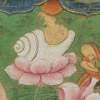
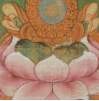
| Eye | Ear | Nose | Tongue | Body |
| Form | Sound | Smell | Taste | Touch |
 |
 |
 |
 |
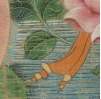 |
| Mirror | Small cymbal (tinsha) | Conch with incense | Peach | Cloth |
| Different lineages have different types of offerings, but, in general, they are as follows: |
||||
| Mirror | Conch | Incense | Honey | Hada |
| Mirror | Small cymbal (tinsha) | Incense | Conch with liquor | Hada |
| Butter lamp | Small cymbal (tinsha) | Incense/Flower | Fruit | Hada |
| Note: | |||
| ● | Five offerings together with "Ejia" (scented water), is known as six objects of offering, and is the essential offering when one practises a session of dharma. The six types of offering can equate to the six Paramitas, namely scented water with Giving Paramita; fragrance with Upholding Precepts Paramita; flower-rosary with Patience(Endurance) Paramita; incense with Diligence Paramita; food with Meditation Paramita; and oil lamp/lit candle with Wisdom Paramita. | ||
| ● | Offering is differentiated between ‘Reason Offering’ and ‘Matter Offering’. Matter Offering is the placing of objects for offering on the altar and based on the blessing of the Three Mysteries (remarks: The Three Mysteries, namely ‘body, speech and mind’, are a formulation within Vajrayana Buddhism. The Three Mysteries are often mentioned in Vajrayana discourse, particularly in relation to samaya, the vows undertaken between a practitioner and their Guru during empowerment). Reason Offering is the absence of object offering, it is the posture of sitting straight with an upright body visualising the Bodhicitta, and using mudra and mantra to express the sense of offering. And, the offering made before the blessing from Yidam, is called the ‘Advance Offering’; and the offering made after the end of recitation of sutras, mantra, Buddha’s name/Bodhisattva’s name, etc, is called the ‘Final Offering’. | ||
| ● | Auspicious Mirror | ||
 |
|||
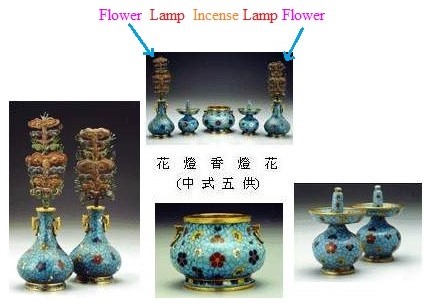
| ● | Chinese-style Five Offerings (1) | ||
 |
|||
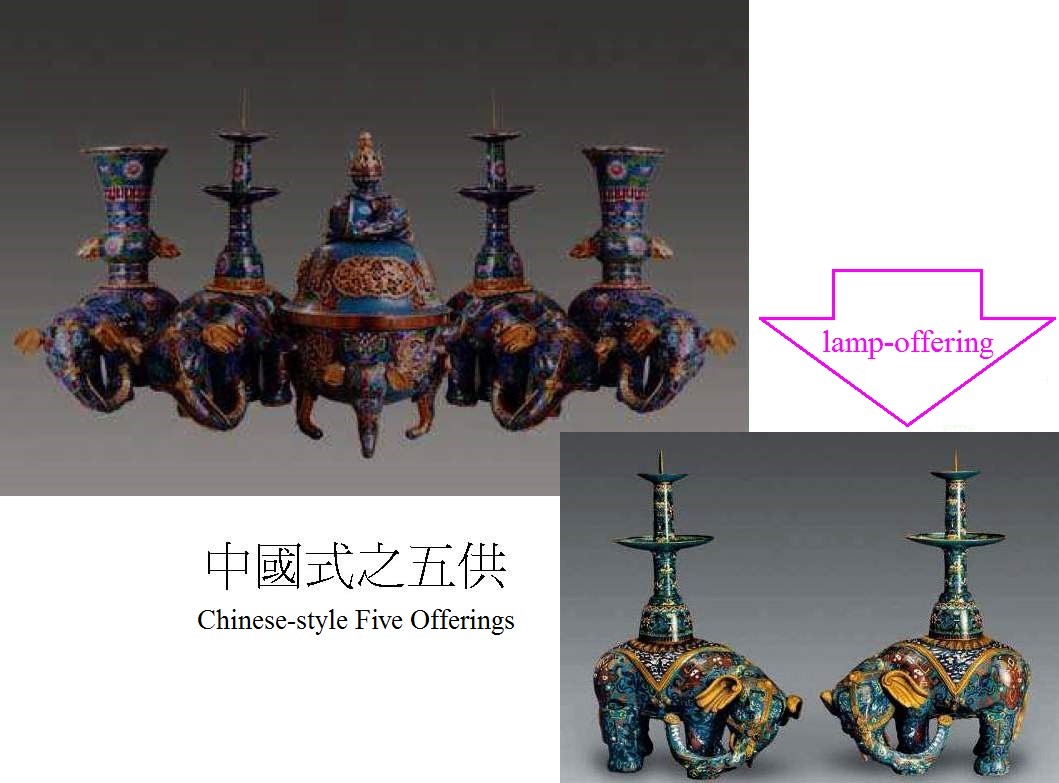
| ● | Chinese-style Five Offerings (2) | ||
 |
|||
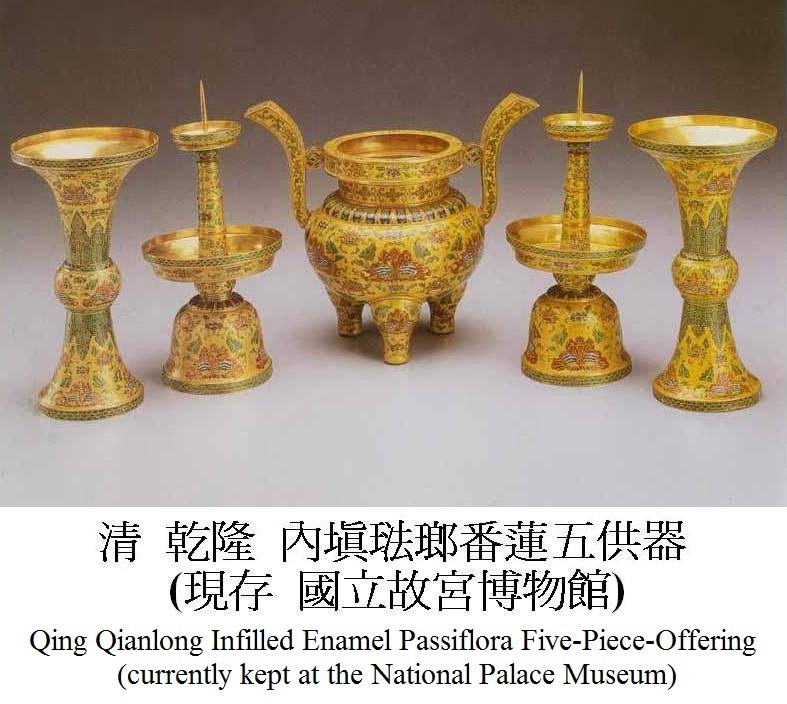
| ● | Chinese-style Five Offerings (3) | ||
 |
|||
