
A Current Thought and Spiritual Unity
Rinpoche discoursed on 21st November, 1993
Rinpoche repeated it in the Vajrayana Association (France) in September, 1994
Uploaded to the Website on 1st November, 2014 (after about twenty-one years)
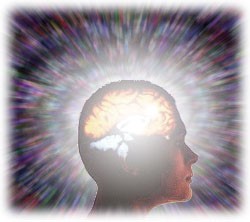
| Introduction We should not belittle a current thought because it is a combined image of both cosmic consciousness and spirit of the universe (heaven and earth). The power of ‘thought’ is so inconceivable that it is known all under heaven, omnipresent as well as all-inclusive. A good thought can plant the cause of (going to) the heavenly realm while a bad one paves the road to hell. This is something that a Buddhist ought to have known necessarily. If thoughts do not arise, there will be an immediate break between prior and subsequent. Hence, one is able to attain a state of no-thought mind (Right Mindfulness) at once. |
 |
| Orthodoxy (1) | |||
| ● | We are revolving in the circle of ‘Thoughts’ throughout our lifetimes. It is just like ‘the coming in and going out of breath’ as well as ‘the beating of pulses’. Thoughts and ideas rise one after another correspondingly and repeatedly without any leisure moments in between. | ||
| ● | When one is asleep, one’s thoughts and ideas will be shifted to the bottom layer in which they appear in one’s dream in the form of subconscious images instead. As the old saying goes, “What you are thinking in the day will come out in your dreams at night.” One thinks of one’s Yidam in the day and dreams of one’s Yidam at night, it is not anything unusual at all. You said that you had seen Bodhisattvas in your dreams; this is also regarded as something normal. | ||
| In fact, a Vajrayana practitioner must tune trivial matters during daytime to business of the Yidam’s and keeps the visualization of the Yidam even at night so that one is still practising Yidam’s Sadhana in the nighttime. | |||
| ● | Zhuangzi (also known as ‘Master Zhuang’ who was an influential Chinese philosopher in the 4th century BC during the Warring States period) said, “A divine man has no dreams”. It is actually a very profound realm since a great practitioner has already achieved the state of ‘free from false thoughts’ as well as having ‘a liberated mind which is detached from time and space’ such that there is no more subconscious negative matrix left behind (in one’s mind) to cause troubles in (the form of) dreams. | ||
| (Ha! No wonder that no one has talked to me about their dreams nor request to have dream interpretation recently. You used to utter a lot about your dreams in the past. A handful of you, each talked about a dream a day that made me listen to more than ten dreams per day. Now, all of you have become great practitioners who do not dream anymore. You have made progress indeed!). | |||
| ● | Although great heroes and talented persons from ancient to modern times were such ingenious that they could explore and expand their territories as well as conquering the world, they were unable to control their own restless and whimsical thoughts. Julius Caesar of the Roman Empire had ever said, “It’s much easier to conquer the world than to tame oneself.” Hence, cultivation is to tame oneself and save (liberate) oneself on one’s own. Your Guru has not saved you, just as Buddha Sakyamuni said, “I haven’t saved any sentient beings. The sentient beings are enlightened because they have saved themselves.” | ||
| Orthodoxy (2) | |||
| ● | Perhaps you may ask questions like, “What is a current thought?” and “Is it a thought that emerges from the mind?” | ||
| If it is as simple as that, how can a single thought give rise to so many states of mind and be connected with the nine remote places and the ten spiritual realms? | |||
| ● | First of all, one should not take the words literally that it is explained as a thought. As a matter of fact, ‘a current thought’ refers to the continuous concentration of one’s attention on a single thought so as to accomplish spiritual unity to a certain extent. Like electromagnetic radiations, spiritual strength, which comes from mental power, can form different mental-force fields. It is a kind of continuous mental activity. | ||
| ● | In Buddhism, a current thought is subdivided into Right Mindfulness (Sanskrit: Samyak smrti), pure thoughts, distracting thoughts (erroneous thoughts). | ||
| Right Mindfulness | ── | one of the Eightfold Noble Paths. One thinks wholeheartedly of the essential characteristic of reality (Sanskrit: Bhutatathata) whereas reality is nullity (no form). Thoughts are of no false thoughts (that is correct thoughts). Neither the one who can think nor the one who is thought of is posited. Both ‘I’ and Dharma are void but void is also not posited. With the passing of time, one is so skillful that one overcomes all worldly thoughts and enters into sainthood by attaining a state of no-thought mind. | |
| Pure thoughts | ── | the chanting of the names of Buddhas as well as the carrying out of the corresponding visualization with one’s mind highly focused on a certain realm without the arisen of any distracting thoughts is known as pure thoughts It also refers to the chanting of Buddhas’ names in the hope that one can be reborn in Sukhavati (the Western Pure Land of Buddha Amitabha in Mahayana Buddhism). Chanting the mantra of Yidam wholeheartedly, one hopes to be reborn in the Pure Land of the Yidam. When one’s thoughts are concentrated, thought and hope will be combined together and thus the correspondence of the Buddhas/Yidam and one’s mind will enhance one to be reborn in the Land of the Yidam. A practitioner, who is deeply convinced by the presence of the Pure Land of Buddha Amitabha/the Yidam, possesses a strong power of vow to be reborn in the Western/the Pure Land of the Yidam. One then concentrates one’s mind in the chanting of the Buddhas’ names/mantras. As time passes, one becomes more and more skillful that one’s mind and thought are purified without the arisen of erroneous thoughts. Thus, the radiation frequency of one’s mind waves which are gradually adjusted to coincide mutually with that of Buddha Amitabha/the Yidam whose vow is to save sentient beings. The correspondence of Buddhas/Yidam and one’s mind is like a son thinking of his mother or a wife remembering her husband that there is a swap between the feel (of sentient beings) and the response (of the Tathagata) and the complacency to be reborn in the Buddha’s Land after death will naturally be resulted. | |
| Distracting thoughts | ── | also known as erroneous thoughts. Emergence of delusion creates karma and this is the formation of ‘Dependent Origination Arising As Caused by Karma’ which is described as having a restless and jumpy mood (i.e. unsettled in mind) by ordinary people. Though such kind of thought is of impure, it will also achieve spiritual unity to a certain extent if one can have one pointedness of mind. (Sanskrit: ekagrata, the term which is defined as a mental factor that has the function to focus on an object. It means the state of having one point. This is the unification of the mind on its object.) The concentration (samadhi) of ordinary beings (凡夫定), the concentration in the realm of desire(kama-avacara samadhi欲界定) the concentration in the only emptiness (頑空定), in addition to aberrantly determined of non-Buddhists (miccha-samadhi外道的邪定), are all from the miscellaneous practices of erroneous thoughts (雜修妄念). Besides, the Three Realms and the Six Destinies of the Contaminated World (有漏世界) are all from distracting thoughts (erroneous thoughts). Hence, you must not be discouraged by the fact that you have lots of erroneous thoughts. Having erroneous thoughts is pretty good as you can still achieve a number of ‘samadhi’ if you are capable of improving! | |
| Conclusion | |||
| It is said in 【Suramgama Samadhi Sutra】, “Don’t cultivate distracting/false/erroneous thoughts.” Therefore, the chanting of mantras in Esoteric Buddhism is precisely not cultivating erroneous thoughts but practising pure thoughts. | |||
