
Retributions for Sleepyheads
| Introduction | ||
| Expounding on the scenes of disciples at that time who were fond of sleeping during discourses and they were also recorded in many sutras, the Buddha aimed at teaching practitioners in the future who are determined to learn Buddhism earnestly to treat these as warnings so that they can endeavor to improve themselves by eliminating their pernicious habits and can eventually achieve attainments in their practices. Never presume that there were such a large number of great virtue (大德), great practitioners (大修行人) and Arhats (阿羅漢) etc. who had ever fallen asleep secretly in the course of their practices and are recorded in sutras. For those who are having the karmic heritage of severe laziness, they will merely associate that they themselves who are just ordinary people can certainly feel at ease to go off to dreamland at any time and in anywhere since there were those great practitioners who had ever fallen asleep during unsuitable occasions! However, as a Buddhist with correct faith, one should treat the instances that the Buddha gave in His discourses as warnings to keep oneself alert instead of using them as excuses to soothe oneself ---- even great practitioners were fond of sleeping, it is not anything queer for me to fall asleep (during practices), is it? For fear that you will misunderstand (誤解) the original intention of the Buddha, or distort (曲解) the meanings conveyed in sutras, or even worse misinterpret (錯解) the following information to support your bad habits with quotations from sutras and continue to be sleepyheads outrageously. Making up more and more excuses for your bad behaviour without feeling regret, you are not confronting your problems nor trying to solve them at all. It is really pitiful! Besides, as long as you know that you are only ordinary persons, how can you be regarded as being the same category as great virtue, great practitioners and Arhats etc.? It must be understood that after these great virtue, great practitioners and Arhats had experienced the reprimand and teaching from the Buddha, all of them did make a determined effort to correct their mistakes and managed to attain good achievements in their cultivation. Have you ever looked into the matter in such an aspect and followed the footsteps of these avatars(聖者們)(to make corrections determinedly)? Having read this piece of article, it is hope that practitioners can be aware of their own bad habits and make improvements as well. | ||
| Orthodoxy | ||
| Please read the followings attentively and make contemplation. | ||
| 1. |
【Sutra on the Buddha’s Bequeathed Teaching】(【佛遺教經】) records: “Bhikkhus(Buddhist monks), all of you should cultivate wholesome Dharma vigorously by day without allowing the time to be wasted. There should not be any cease to make an effort in the early evening and late at night while it is good to chant sutras in the middle of the night to make yourselves better informed. Do not allow yourselves to pass your lives vainly and fruitlessly without doing anything beneficial to the world or benefitting your cultivation practice on account of sleep! You should envisage the world as being destroyed by impermanent fire and quickly determine to save yourselves from it. Do not sleep! (do not spend much time in sleeping) Afflictions are like robbers who come to rob your belongings (i.e. your lives) as well as waiting for chances to kill humans. Being more terrible than your opponents, creditors or enemies, afflictions as robbers always observe and expect you in the dark. How can you feel at ease to fall asleep under such circumstances and not arouse yourselves? These afflictions are a poisonous snake which is sleeping in your mind. They are like a black cobra sleeping in your room. Destroy the snake quickly with the sharp spear of upholding Precepts. Only when that dormant snake is driven away will you be able to rest at ease. If you sleep, not having driven it away, you are men without shame (hiri). The clothing of shame (hiri) is the very best among all adornments. Shame can also be compared to an iron hook that is able to restrain people from doing anything which are evil, non-compliant with Buddhism or improper. Hence, you should always have shame but never be without it even for a moment. If you are parted from shame, you will lose all of your meritorious virtue. Only those who feel shameful can be able to receive good Dharma; whereas those who are shameless are of no difference from birds and beasts.” |
|
| 2. |
【The Buddha Speaks the Pacala Sutra】records (【佛說離睡經】載): The Buddha learnt that Venerable Maudgalyayana had fallen asleep when doing walking-about (Sanskrit: cankramana, it means to cultivate their minds and seek proper concentration經行/行禪 ) in a quiet place alone, He told him, “Maudgalyayana! Maudgalyayana! Are you very sleepy?” “I’m afraid yes, the World Honoured One!” (replied Maudgalyayana.) (The Buddha continued,) “When you’re sleepy, don’t think anything about sleep. You should avoid other related thoughts too. Without further delusions, you can thus be withdrawn from sleep. Maudgalyayana, if you’re still unable to extricate yourself from sleepiness, you should read and study the sutras and Dharmas you’ve learnt over again. In this way, you can be parted from sleep. Maudgalyayana, if it doesn’t work, you should expound the sutras and Dharmas you’ve learnt to many others. In this way, you can be parted from sleep. Maudgalyayana, if it doesn’t work, you should practise the sutras and Dharmas you’ve learnt. In this way, you can be parted from sleep. Maudgalyayana, if it doesn’t work, you should rinse your eyes and body joints with cold water. In this way, you can be parted from sleep. Maudgalyayana, if it doesn’t work, you should rub your ears with your hands. In this way, you can be parted from sleep. Maudgalyayana, if it doesn’t work, you should leave the lecture room to look at the scenery outside and observe the stars (at night). In this way, you can be parted from sleep. Maudgalyayana, if it doesn’t work, you should walk about in open areas to gather in the six roots of sense (concentrate on pure thought). For trivial matters, leave them behind to be solved later. In this way, you can be parted from sleep. Maudgalyayana, if it doesn’t work, you should stop the walk about. Arrange the nisidana (尼師壇/sitting cloth坐具) on the bed and then sit cross-legs in a lotus position. In this way, you can be parted from sleep. Maudgalyayana, if it doesn’t work, you should return to the lecture room. Fold the uttarasanga (鬱多羅僧/outer robe七條衣) repeatedly for four times and put it on the bed. Hold up the sanghati (僧伽梨/a monastic robe九條衣) so that your head can rest on it. Then lie in bed with your right subcostal flanking and the two legs piled (left leg on top of the right one). Your mind ought to remain peace and quiet without any random thoughts. You must always think that you are waking up.” |
|
| 3. |
In the 12th of 【Sigalovada Sutra (The Layperson’s Code of Discipline) 】, 【Dirgha Agama】, 2nd division records (【長阿含經】第二分【善生經】第十二載): The Buddha told Sigala, a householder’s son, “When one sleeps by day habitually, one will keep late hours at night. For one who is perpetually intoxicated and licentious is not fit to lead a household life. Refusing to do anything from morning to night as well as being idle in both winter and summer, things are left undone and thus success goes away from such a person.” |
|
| 4. |
【Samyukta Agama】,Volume 22 (598) records (【雜阿含經】卷二十二 (五九八) 載): The King said a verse, “One indulges in sleep, yawns and one feels unhappy; one’s mind becomes so confused after eating to fullness that one feels sluggish and reluctant to practise diligently. As sentient beings are clouded by these seven events mentioned, the Noble Path cannot be manifested.” Then the World Honoured One answered with another verse, “One indulges in sleep, yawns and feels unhappy when there is no chance to sleep; one becomes confused after eating to fullness and is always sluggish and reluctant to practise diligently. If one can cultivate diligently to get rid of these (bad habits),the Noble Path can be developed .” |
|
| 5. |
In the 1st Part (615) of「Nipata V (Margavarga)」,【Samyukta Agama】,Volume 24 records (【雜阿含經】卷二十四「第五誦道品」第一 (六一五) 載): The Buddha told Ananda, “If one is indulged in sleep physically, one’s mind and the Dharma learnt will both be slacked off.” |
|
| 6. |
【Samyukta Agama】,Volume 26 (707) records (【雜阿含經】卷二十六 (七0七) 載): The Buddha said, “Desire(kamacchanda), ill-will (vyapada), sloth-torpor or drowsiness (thina-middha), restlessness-worry (uddhacca-kukkucca) and doubt (vicikiccha) are the five kinds of hindrances that give rise to the build-up of various annoyance and trouble. The five (hindrances) cover the world and their obstructions are so great that it is difficult to overcome. This blocks sentient beings from seeing the Right Path.” |
|
| 7. |
【Samyukta Agama】,Volume 26 (711) records (【雜阿含經】卷二十六 (七一一) 載): The Buddha told Prince Abhaya, “When one’s body is sleeping, one’s mind is remiss and restless. Since there is a lack of stillness internally, one’s mind is always in such an uncertain state that one doubts the past, the future and the present. Owing to the phenomena of causes and conditions, sentient beings thus suffer from vexation.” |
|
| 8. |
In the 3rd (56) of「First Chant」, 【The Shorter Chinese Samyukta Agama】,Volume 3 records (【別譯雜阿含經】卷三「初誦」第三 (五六) 載): The Buddha said, “If a person wants to protect oneself, one should always guard one’s body, speech and mind. Besides, one should also practise wholesome Dharma and possess a sense of shame. If one does not protect the three karmas (trividha-dvara; namely body, speech and mind), erroneous views and drowsiness will obstruct wholesome Dharma and then one will become a follower of demons. To avoid getting injured in such a way, one has to protect oneself by cultivating Samadhi and Wisdom as well as thinking of what the Buddha has taught frequently.” |
|
| 9. |
In the 19th (5) of 「Chapter on Advice」,【Ekottara Agama】,Volume 10 (【增壹阿含經】卷十「勸請品」第十九(五) 載) records: The World Honoured One told the Buddhist monks, “There are two ways which make human beings lack wisdom, what are they? Dislike consulting outstanding persons but fond of sleeping without any intention to practise diligently both make human beings lack wisdom. On the other hand, there are two other ways that enable human beings to possess vast wisdom, what are they? Eager to inquire others, not fond of sleeping but practises diligently enable human beings to be intelligent (have wisdom).” |
|
| 10. |
In the 30th (2) of 「Chapter on Sotapatti」, 【Ekottara Agama】,Volume 22 records (【增壹阿含經】卷二十二「須陀品」第三十 (二) 載): The World Honoured One talked to the Buddhist monks, “Do all of you see the elder who is sleeping with his legs widely stretched? This elder monk had possessed a dragon’s body for his last five hundred past lives. It is predictable that when he dies in this life, he will also be reborn as a dragon because he does not respect the Buddha, the Dharma and the Sangha. For sentient beings who do not respect the Buddha, the Dharma and the Sangha, they will be reborn as dragons when they die. Do all of you see the eight-year-old Samanera (沙彌) named Sumana, who is sitting uprightly and thoughtfully somewhere not far from me? After seven days from now, this Samanera is going to attain Four Bases of Meditative Power (四神足, Sanskrit: Rddhi-pada,) as well as The Four Noble Truths. Besides, he will achieve a full mastery over The Fourth Dhyana and an accomplishment of Four Right Efforts (四意斷, Sanskrit: Samyak-prahana, Four Right Efforts:the effort to avoid; the effort to overcome; the effort to develop; the effort to maintain). It is because this Sumana samanera does respect the Buddha, the Dharma and the Sangha.” |
|
| 11. |
In the 5th of Part 1 of the 38th of 「Chapter on Effort」,【Ekottara Agama】,Volume 31 records (【增壹阿含經】卷三十一「力品」第三十八之一 (五) 載): When the World Honoured One was giving a discourse to an innumerable crowd, Anuruddha (one of the ten chief disciples of the Buddha who was considered supreme in Celestial Eye) felt asleep among the crowd. Seeing that Anuruddha was sleeping, the Buddha told Anuruddha, “Did you learn Buddhism because you were fear of the law of the place or afraid of robbers? Why did you leave home and became a monk to learn Buddhism? Having the surname of the clan, you left home and became a monk to learn Buddhism because of a strong faith (in Buddhism). Today, I am expounding the Dharma in person and why did you fall asleep under such circumstances?” At that time, Venerable Anuruddha stood up from his seat immediately. He then partially bared his right shoulder (and turned it towards the Buddha), knelt down and joined his palms together with the fingers crossed forming ten before he said to the Buddha, “From now on, even if I am going to be disfigured or my body is going to be rotten, I will never fall asleep when sitting in front of the Tathagata.” |
|
| 12. |
In the 2nd of Part 1 of the 40th of 「Chapter on Seven Days」,【Ekottara Agama】,Volume 34 (【增壹阿含經】卷三十四「七日品」第四十之一 (二) 載) records: The World Honoured One asked the Buddhist monks, “What are the seven methods of attaining Avaivartika (不退轉之法, the stage of non-retrogression in Buddhist practice)? Monks should learn that, when Buddhist monks gather together in a certain place and all of them manage to get on with one another amiably in which those in higher levels are being respected whilst those in lower levels are being cherished. They retreat for the sake of further achievements so that various wholesome Dharmas are practised to attain Avaivartika and they are free from the temptation of demon Mara as well. This is known as the first method of attaining Avaivartika. Secondly, the Sangha is in such a harmony that the entire monks act in compliance with the teaching of Buddhism without doing anything that violates Buddhism. They retreat for the sake of further achievements and Avaivartika is attained. Besides, the destruction of demon Mara can also be omitted. This is known as the second method of attaining Avaivartika. Thirdly, monks do neither deal with worldly affairs nor seek for happiness as well as fortune on Earth (because they understand the impermanent nature of matters). Instead, they retreat for the sake of further achievements and are free from the temptation of demon Mara. This is known as the third method of attaining Avaivartika. Fourthly, monks do not read commonplace books in the world so as to avoid the formation of affection, greed, hatred and delusion etc. in their minds under the influences of these books. They retreat for the sake of further achievements and are free from the temptation of demon Mara. This is known as the fourth method of attaining Avaivartika. Fifthly, monks who practise cultivation diligently are able to get rid of sleeping and can stay alert as well as awake constantly. Instead, they retreat for the sake of further achievements and are free from the temptation of evil demons. This is known as the fifth method of attaining Avaivartika. Sixthly, monks do not learn arithmetic themselves and do not encourage others to practise it either. They always enjoy practising Buddha Dharma in peaceful and tranquil places. They retreat for the sake of further achievements and are free from the temptation of evil demons. This is known as the sixth method of attaining Avaivartika. Lastly, monks dislike all sorts of worldly trifles (which are caused by greed, hatred and delusion) and they prefer practising Dhyana every day because they are deeply convinced of the Buddha Dharma learnt. They retreat for the sake of further achievements and are free from the temptation of demons. This is known as the seventh method of attaining Avaivartika.” |
|
| 13. |
In the 2nd of「Chapter on Teaching」,【Dhammapada】,Volume 1, records (【法句譬喻經】卷一「教學品」第二載): There was a monk who was unable to comprehend the Dharma thoroughly. Every day after having meals, he would return to his kuti (monk’s apartment), closed the door and slept quietly. Ignoring the impermanent nature of worldly matters, he merely wanted to give his physical body the utmost satisfaction and enjoy the comfort. He slacked off day and night and thus his future was indefinite. Nevertheless, his life would be terminated after seven more days. Sympathising as well as fearing that he would fall into the evil path , the Buddha went to his room immediately. The Buddha snapped His thumb and middle finger so as to make him alert and then warned him, “Ugh! Get up, why are you still sleeping? Small animals like wasps (parasites on cow’s/ox’s skin), conches, clams and silverfish. Hiding themselves among unclean places so as to stay there comfortably (without any need to get away from their predators), for the sake of the comfort of their physical bodies, they remain living in such environment obsessively. One is cut by knife leaving a painful sore which makes one feels great suffering, How can one simply go sleeping at this time to deceive oneself from the pain? Should think deeply about Buddha Dharma without being lazy because a benevolent person should walk the righteous track! Henceforth, there is no more sorrow and apprehension. Think of the non-arising and non-ceasing principle of Nirvana frequently. It is essential to learn the right knowledge as well as the right view since they are beacons in the dark. People with the right knowledge and the right view enjoy a better virtue which is as many as a thousand times of that of ordinary people and they will never fall into evil paths when they die.” Hearing the verse from the Buddha, the monk was woken with a start immediately. When he found that the Buddha had come to his room to teach him in person, he felt respectful but also even more panic. He got up at once to confess and prostrate to the Buddha. The Buddha said to him, “Don’t you realize the various destinies of your previous lives? At the time when Buddha Vipasyin was on Earth in the past, you had also been a monk. However, you hankered after offerings of riches and forgot about the chanting of sutras as well as the keeping of Precepts. You went to sleep after meals without the visualization of the impermanent nature of worldly matters. Hence, when you died, your spirit was reincarnated as wasps and this lasted for fifty thousand years. When the retribution as wasps was over, you were reborn as conches, clams and silverfish among trees successively in which each reincarnation lasted for fifty thousand years. Living in the dark, these four kinds of animals covet their physical bodies and crush on existence. As they favour living in areas where sunlight cannot be reached, their homes were built in darkness. They dislike brightness and each of their sleep can continue for more than a hundred years such that their bodies and minds are both entangled in the net of karma without any intention to seek for liberation from the sea of births and deaths. Now that you have just finished suffering from your retributions of karma and can be reborn as a Buddhist monk (in this life), why are you still reluctant to part with sleeping?” Having learnt the history of the predestined causes of his past lives, a sense of shame and self-accusation arouse from the innermost being of the monk. The Five Hindrances which were like clouds disappeared and the monk attained Arhatship forthwith. |
|
| 14. |
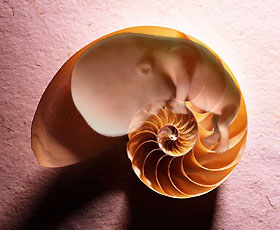 In the 2nd Part of 25th of「Adhyasayasancodana/Fashengzhik Hui」,【Maharatuakuta Sutra】,Volume 92 records
(【大寶積經】卷九十二「發勝志樂會」第二十五之二載): In the 2nd Part of 25th of「Adhyasayasancodana/Fashengzhik Hui」,【Maharatuakuta Sutra】,Volume 92 records
(【大寶積經】卷九十二「發勝志樂會」第二十五之二載): The Buddha said, “Maitreya! As Bodhisattva of the very first rank (of a total of 52), one has to look into the twenty faults of sleep. It is through the observation that Bodhisattva can be initiated into diligence and enthusiasm (to accomplish wholesome action) without any signs of feeling fatigue. Maitreya! What are the twenty faults of taking pleasure in sleeping? |
|
| 1st: | lazy and sluggish; | |
| 2nd: | heaviness of body; | |
| 3rd: | dull in complexion, languish; | |
| 4th: | higher risk of having diseases/worsen the illness; | |
| 5th: | abnormal body temperature (weak in health); | |
| 6th: | indigestion; | |
| 7th: | easier to have skin disease; | |
| 8th: | sloth in practising cultivation; | |
| 9th: | increase in imbecility; |
| 10th: | weak in wisdom; | |
| 11th: | skin dark and foul (which shows that one looks unhealthy); | |
| 12th: | not shielded and sustained by non-humans (including Dharmapala as well as supernatural beings); | |
| 13th: | slow-witted in behaviour; | |
| 14th: | tangled up in vexation; | |
| 15th: | having kleshas (includes state of mind such as anxiety, fear, anger, jealousy, desire, depression etc.) which hinder the pure mind as well as the growth of wisdom; | |
| 16th: | unwilling to practise wholesome Dharma; | |
| 17th: | the impairment of good Dharma; | |
| 18th: | evil conducts accumulate day by day while good deeds reduce day after day; | |
| 19th: | abhor diligence; | |
| 20th: | being look down upon (because of one’s behaviour). | |
| Maitreya! These are the twenty faults of taking pleasure in sleeping. | ||
|
At that time, the World Honoured One also said a verse, “One’s body is heavy making one lacks a dignified bearing to behave. Being sluggish, resulting in loss of ability to work. Absence of colour in constitution as well, Are all faults from fond of sleeping. |
||
|
Tangled up in sickness and vexation frequently, That person is suffering from Anemogenous Jaundice (風黃, a kind of disease) due to accumulation. The four elements (earth, water, fire and emptiness) run counter to one another. Are all faults from fond of sleeping. |
||
|
Indigestion of the food and beverage taken, One’s body is neither bright nor smooth. Voice sounds hoarse and unclear, Are all faults from fond of sleeping. |
||
|
Pemphigus (瘡疱,a skin disease in which water blisters form on the skin) appears on one’s body. Always in a state of dizziness, day and night, Providing chance for the growth of various parasites, Are all faults from fond of sleeping. |
||
|
Diligence in practice degenerates, Treasure owned is less. Dreaming frequently hinders realization, Are all faults from fond of sleeping. |
||
|
The net of delusion keeps growing, Enamoured with various false views as well. Both are exuberant which are difficult to be cured. Are all faults from fond of sleeping. |
||
|
Various wisdom is impaired But Ignorance is accrued. Adding to the degradation in will (determination/aspiration), Are all faults from fond of sleeping. |
||
|
Going to the Aranya (阿蘭若, a hermitage or place of retirement for meditation), Always being sloth in mind, Giving chances for the non-human (deities, demons, asura etc.) to come and make destructions. Are all faults from fond of sleeping. |
||
|
Ignorance and bewilderment cause the loss of Right View, Reading sutras without understanding the principles, Misinterpreting the Buddha’s teaching in discourses. Are all faults from fond of sleeping. |
||
|
Ignorance also leads to confusion, Appearance of doubts makes one in annoyance and trouble. Mind is unable to be happy or peaceful. Are all faults from fond of sleeping. |
||
|
With no meritorious virtue accumulated, One’s mind is full of repentance and dejection That resulted in an increase of worries. Are all faults from fond of sleeping. |
||
|
Staying away from good friends (mostly industrious practitioners), Right Dharma is also rejected. Practise Dharma that violates Buddhism instead. Are all faults from fond of sleeping. |
||
|
Fail to learn Buddhism with a joyful mind. Does not only reduce the virtue achieved, But also getting away from wholesome Dharma, Are all faults from fond of sleeping. |
||
|
Too much sleep makes one unhealthy psychologically, Seldom in amusement is the reality. Physically not healthy either, with the four limbs thin and weak. Are all faults from fond of sleeping. |
||
|
Knowing that oneself is lazy and slack, Being jealous of the diligent practitioners, thus Slander their demerits and wickedness. Are all faults from fond of sleeping. |
||
|
Seeing the errors of sleeping, Wise man always manages to part from it. . Stupid ones have the net of heterodox views increased, No merits gain but a loss of meritorious virtue. |
||
|
Wise man always practises hard To cultivate the Path of Purification (清淨道, Pali:Visuddhimagga). Achieved the peacefulness and free from sufferings, Received acclaim from various Buddhas. |
||
|
From the worldly artworks and skills, To the exquisite works in the spiritual world, All require diligence to accomplish. These are what wise men should practise. |
||
|
If one wants to attain Bodhi, Should understand the faults of sleep, Sustain the industrious power. Realisation of a sense of shame as well, |
||
|
Hence, all wise men should Possess the mind of diligence, Stay away from sleeping, So as to guard and maintain the Bodhi Seed.” |
||
| In the meantime, Maitreya Bodhisattva said to the Buddha, “The precious World Honourable One, (it is scary that) fond of sleeping can cause such immeasurable faults. For one who has heard of the above, but still there is not any regret or disgust arisen in one’s mind to urge oneself to practise cultivation more diligently and vigorously, one is thus regarded as a man of great ignorance. For a Bodhisattva, who aims at attaining Anuttara-samyak-sambodhi (阿耨多羅三藐三菩提), has heard of such true principles as well as the merits and benefits of the wholesome Dharma without the arisen of diligence or stay in sapta bodhyanga (菩提分/七覺支,the seven factors of enlightenment) but becomes slack. It is something impossible.” | ||
| 15. |
In the 「Link of Upagupta’s disciples --- the cause and effect of sleep」,【Asokasutra】,Volume
9 records (【阿育王經】卷九「優波笈多弟子因緣之睡眠因緣」載): There was a good man who had left home and learned Buddhism under Upagupta as a monk loved sleeping very much. Once when Upagupta was expounding Dharma, the monk fell asleep again. Then Upagupta told him to go to the meditation area and seat with his legs crossed under a tree (to practise meditation), he still fell asleep though. Seeing this, Upagupta employed his miraculous power to transform the monk’s surroundings into a deep gulf which was as deep as one thousand cubital lengths so as to frighten him. When the monk woke up, he was scared to see the deep gulf. Upagupta made him some paths after that so that he could leave the place. Following the ways out, the monk managed to leave the gulf and head to Upagupta’s place. Upagupta then told him to go to his dwelling. The monk said, “There’s a deep gulf which is one thousand cubital lengths deep over there.” Upagupta replied, “That deep gulf is considered small when compared with the one of life and death which is in fact the vastest. They are the so-called birth, death, illness and old age as well as anxiety, sorrow, sufferings and vexation. If a person does not know the Four Noble Truths, one will probably fall into the deep gulf of life and death.” The monk returned to the tree again and seated under it with his legs crossed. As he was fear of the deep gulf in his mind, he did not fall asleep anymore. His mindset was highly advanced for the cause of fear and eventually he had had all his annoyance and troubles cleared that he attained Arhatship. |
|
| 16. | 《Great Treatise on the Perfection of Wisdom》,Volume 15 records (《大智度論》卷十五載): “Desire is the first army, worry is the second, hunger and thirst are the third army, craving is the fourth, sleep is the fifth army, fear is the sixth, repent of doubt is the seventh army, anger is the eighth, gain, praise, honour and undeserved fame make up the ninth one, self-exaltation and disparaging others are the tenth. All these armies drown the Buddhist monks.” (Sleep is said to be one of the ten obstacles for monks and practitioners. These ten obstacles, which are also known as ‘The Ten Armies of Mara’ can destroy practitioners.) |
|
| 17. | The discourse of a Buddhist monk, Dharma Master Sing Yat (a great Dharma teacher and practitioner who is also the fifth Abbot (Years 1983-1990) of Po Lin Monastery in Hong Kong) in a 7-day Meditation Retreat (in 1991): As soon as delusion is gone, there comes drowsiness plus dreaming, sleeping and snoring which are also regarded as drowsiness. When drowsiness is present, one becomes bewildered. It is just like having clouds and mist in the sky so that the Moon cannot be seen. Therefore, drowsiness belongs to ignorance whereas delusion belongs to recklessness in which both of them are demons. Delusion makes us produce karma of life and death while drowsiness also makes us do karma of life and death to become conches, clams or other types of animals with shells (in our rebirths). Among them, the drowsiness of conches is the greatest (most serious); They are alright when they are not sleeping but once they fall asleep, it can last for a thousand years or even up to ten thousand years. So, conches and calms which are picked from the sea bed are full of moss on their shells. |
|
| 18. |
A Buddhist monk, Dharma Master Pu-ju expounded an extract from 【Maharatuakuta Sutra】(【大寶積經】): Sutras said that ‘one’s mind should be free from hindrances/coverings and harmful spiritual activities/tethers’. What do ‘hindrances/coverings (of wisdom)’ refer to? They are desire, wrath, doubt, drowsiness/sleep and restlessness-worry which are collectively known as the five hindrances. Resembling the case when there is a lid on a cup or the cup is covered by something that blocks the things inside the cup to be seen, the brightness in our minds is blocked likewise by the five kinds of mental and moral hindrances; one of them is desire while another one is the shock of wrath. The other one is doubt: is there cause and effect? Is there karmic retribution? Are there Buddhas and Bodhisattvas? Consequently, the suspicious mind becomes an obstacle to cultivation-practice. What else is it? It is the drowsiness of mind which drags one to fall asleep and becomes a sleepyhead. Some people are so fond of sleeping that they keep their eyes closed all day long to sleep. Having slept in the world of darkness for a long time, one will easily degenerate and become animals or deep-sea fish which do not possess any eyes (in one’s rebirth). Fish in ocean-deep sea, which is living in a world of darkness, does not need any eyes. Anyway, it cannot see anything (in such a dark environment) even if it has eyes. As a result, a person who is fond of sleeping will easily degenerate and reincarnate as fish living in ocean-deep sea or insects living in the forests which are animals that can never see the Sun or the sky. There is one more left, it is restlessness-worry. It means that something wrong has been done but it is concealed, yet a guilty conscience does come into being. This is called ‘harmful spiritual activities/tethers’ and there are a total of ten kinds of harmful spiritual activities. For example, shameless, without a qualm, jealousy, grudging and greed, regret, sleep, recklessness, drowsiness, anger and paicchanna (a Pali word which means covered, concealed and hidden, 覆藏) which are collectively known as ten harmful spiritual activities/tethers. With the presence of these ten harmful spiritual activities/tethers, there will be a setback in our cultivation practice. This is talking about us, sentient beings. If we reveal and confess with a mind characterized by straight forwardness, the hindrances and tethers in our minds will be vanished. |
|
 |
||
| Conclusion | ||
| No matter whether we are wakened by our consciousness that it is time to get up or by the alarm clock in the morning, if we still remain lying in bed after this, it will bring about ‘a delay in the sleeping routine at night’. This causes an incongruent situation between our body and brain which will influence us for as long as 2~4 hours. It may even interfere with the regular pattern set in our daily lives, scheduled activities or cultivation-practice timetable. It is also found from researches that ‘the extra sleep’ is a waste on the contrary. | ||
| (A) | The awakening mechanism of the body | |
|
According to the report of《Huffington Post》, Dr. Rafael Pelayo, who is a sleep specialist at Stanford University Sleep Medicine Center in the US, says that our bodies do normally possess certain mechanisms which enable us ‘to get ready for awakening’. One of them is to raise the core temperature of our bodies so that we can get more conscious and become aware of the surrounding matters. This happens in the 2-hour period before the awakening. If we do not obtain enough sleep, our core temperature will still remain in the state of deep sleep. When our alarm clock starts to ring at this time, the air inside the bedroom will make us feel that our body is extremely cold and the bed is also too cold to be tolerated. |
||
| (B) | Sleep inertia causes the incapacity of getting awake | |
|
If we go back to sleep after being woken up by the alarm clock, our body mechanism will mistakenly sense that, “Oh! It’s not yet time to get up so it’s not necessary to prepare for the awakening.” Our consciousness will naturally restore to the state of sleeping again. Thus when the alarm clock rings again, our body and mind will suddenly be scared to awake. Awakening under such palpitations results in a feeling of dizziness and a muddle-headed mind which is known as ‘sleep inertia’. If we persist in being sleepyheads continuously and prolong our wake-up time, our body and brain will get more and more puzzled. In that case, even if the sleep lasts longer and there is more sleeping time, our brain becomes less sane instead. More seriously, researches find that this type of ‘sleep inertia’ can continue up to 2~4 hours and our brain will become increasingly obtuse over the long run. Besides, the continuous staying in bed (every morning) may also affect your internal psychological clock. For example, you got up at 7:00am yesterday but this morning the wake-up time was 7:30am. Since the time of getting-up is different from day to day, our body has no idea when we would get tired and this delays our bedtime. As a result, the actual amount of sleep obtained is much less and there may even be the presence of insomnia. |
||
|
Having set the alarm clock to our required wake-up time, we have to follow it strictly by getting up genuinely. Moreover, the daily wake-up time should essentially be fixed and kept in a persistent way. In the course of time, such a habit would have allowed us to fall asleep at ease during night time so that we can automatically wake up at our chosen time in the next morning even though the alarm clock is not set. The fundamental reason for feeling sleepy frequently is caused by the chaos and irregularity in pace in one’s way of life. If one is suffering from malnutrition, disorder in spleen and stomach as well as edema in body etc. which are caused by errors in eating habits over the years and even toxins accumulated in one’s viscera as well, it will lead to an outburst of serious illnesses that no medicines are of any avail. Hence, sleepy persons must pay extra attention to this. I hereby recommend every one: wake up on time every day so as to enjoy the very best spirit daily. |
||
| Postscript | ||
|
A number of very senior fellow practitioners have been seen sleeping in front of Rinpoche/during the discourse of Rinpoche/in the Shrine recently. In fact, such circumstance has already lasted for several years. When these few fellow practitioners who always show their weariness and ‘nodding’ (舂眼瞓) frequently sometimes ask Rinpoche extraordinary questions on essence/oral transmission (心要/口訣) of Esoteric Buddhism, Rinpoche will only respond them with ‘a smile’. Why does Rinpoche give them such a response? The answer is simple. It is because they have not yet carefully read《50 Stanzas on Devotion to the Guru》 which serves as the foundation of cultivating Tantrayana/Vajrayana. Neither have they read it over and over again nor do they carry it out practically. Without being able to build up a stable foundation for learning Tantric Buddhism, how can they manage to move a step further to learn the essence/oral transmission of Esoteric Buddhism ? Just as《50 Stanzas on Devotion to the Guru》says, “One is made to intone the stanzas before one can be taught with the secret teaching (i.e. Tantric Buddhism)”. Viewing from their usual behaviour, Rinpoche is sure that they have not yet studied the stanzas thoroughly and hence nothing else (on Tantric Buddhism) can be taught to them. Another stanza, “One should never show any looks of tiredness physically in front of one’s Guru”. Having shown ‘looks of tiredness physically’, the fellow practitioners have already violated the 《50 Stanzas on Devotion to the Guru》. More importantly, they have ever yawned, nodded舂眼瞓 (remark: it means ‘dozed off’. It is described as nodding 舂 because the opening and closing of the eyelid when one is sleepy is like the motion of husking rice with mortar and pestle 舂米), ‘fished’ 釣魚 (remark: or fishing because one’s head and neck is in an angle like that of a fishing rod when one falls asleep while seated), appeared a weary look, been sleepy or even been fast asleep without realizing it themselves in front of Rinpoche/during the discourse of Rinpoche/in the Shrine. This is another reason why Rinpoche does not answer their ‘extraordinary questions on essence/oral transmission of Esoteric Buddhism’! |
||
